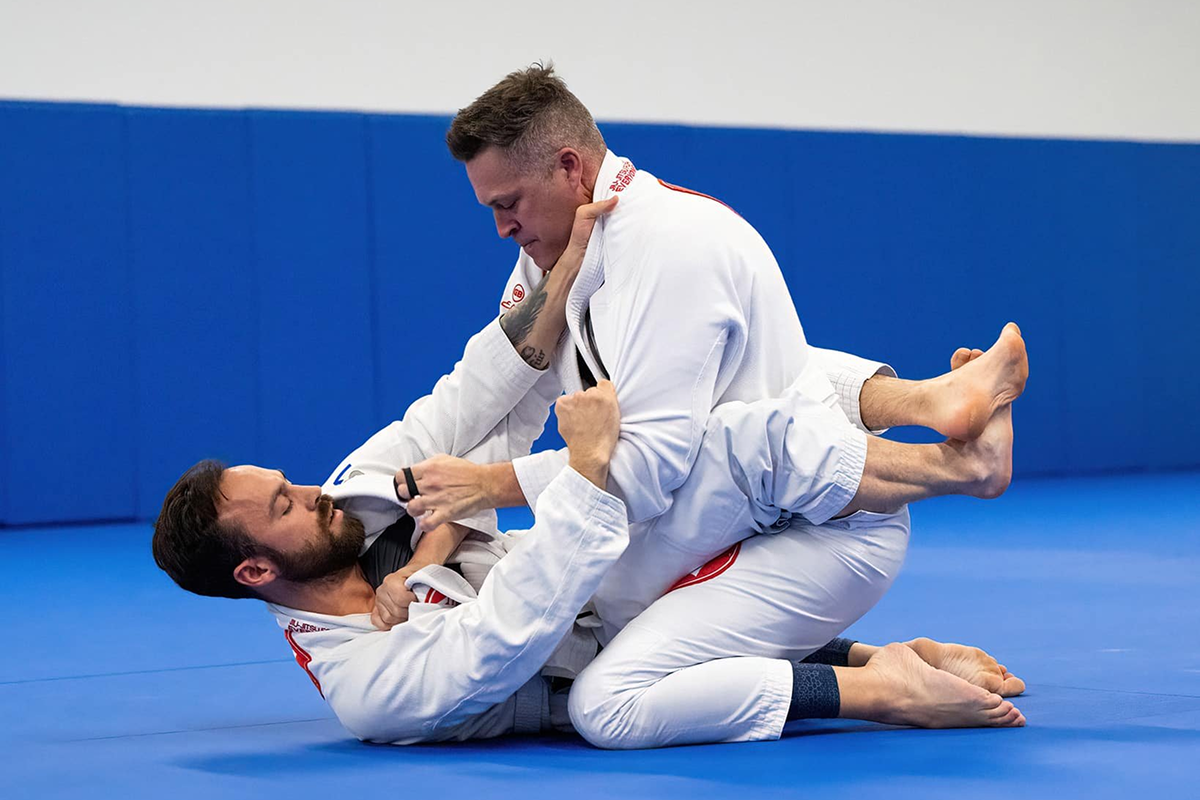
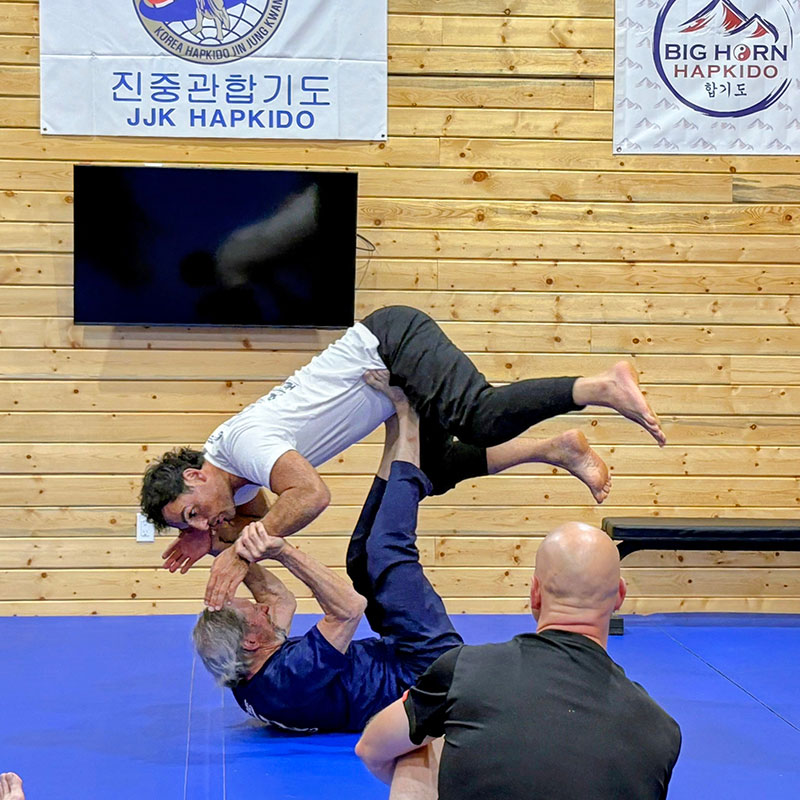
I was fortunate enough to be introduced to Ralek Gracie shortly after he moved to Nashville, TN. We connected in regard to our martial art philosophies in our first meeting together. I asked him if he would take me as a student and my training in Gracie Brazilian Jiu-Jitsu began. While my years of Hapkido training taught me how to defend and attack from a standing position, I had very little training on the ground. I felt this was a weakness in my martial art training. So, knowing the reputation of the Gracie system, I was excited to have the opportunity to learn from Ralek.
The Gracie Legacy
Helio Gracie, Ralek's Grandfather, was a small man weighing a mere 140 lbs. but he continued to defeat opponents much larger than himself. He fought to show how his martial art would allow a smaller person to successfully defend themselves against a larger person. Helio's son, Rorion, moved to California as a young man and began teaching in his garage. In order to attract students, he felt the best way to show the effectiveness of his Jiu-Jitsu was to fight any comers in a no time limit fight. His success led to the beginnings of the UFC and the global respect of this martial art.
When I began training with Ralek, we were also in a garage, and it gives me a strong feeling of connection to the history of Brazilian Jiu-Jitsu.
Principles Over Power
Grandmaster Helio Gracie emphasized discouraging reliance on physical attributes such as strength, speed, or coordination. No matter how strong, fast, or coordinated you are, there is always someone stronger, faster, and more coordinated. This belief was the catalyst that pushed the refinement of these techniques so that even at 140 lbs., one could effectively protect oneself regardless of an opponent's physical prowess.
The emphasis is on leverage, technique, and economy of movement instead of power and speed. As I continue to learn Helio's Brazilian Jiu-Jitsu, it is apparent his principles truly are effective. At 74 years old, I have been training with students who are half my age and much larger than me, but I am learning that the principles found in Jiu-Jitsu truly do teach you to progress against your opponent regardless of size or age difference.
The 32 Principles
Rener Gracie, Helio's Grandson, has written about 32 principles that are used throughout Jiu-Jitsu and that translate powerfully into everyday life. His Grandfather said that Jiu-Jitsu is like a philosophy — it helps you learn how to face life. These principles include:
- The Connection Principle
- The Detachment Principle
- The Distance Principle
- The Pyramid Principle
- The Creation Principle
- The Acceptance Principle
- The Velocity Principle
- The Clock Principle
- The River Principle
- The Frame Principle
- The Kuzushi Principle
- The Reconnaissance Principle
- The Prevention Principle
- The Tension Principle
- The Fork Principle
- The Posture Principle
- The False Surrender Principle
- The Depletion Principle
- The Isolation Principle
- The Sacrifice Principle
- The Momentum Principle
- The Pivot Principle
- The Tagalong Principle
- The Overload Principle
- The Anchor Principle
- The Ratchet Principle
- The Buoyancy Principle
- The Head Control Principle
- The Redirection Principle
- The Mobility Principle
- The Centerline Principle
- The Grandmaster Principle
The Progression Principle
Ralek has hit on the most foundational principle of my understanding of Brazilian Jiu-Jitsu — The Progression Principle. This principle teaches you to continue to progress the value of your position against your opponent. One of the key components is hip progression: engaging your hips against your opponent's hips will lead to optimum control. When you embrace The Progression Principle in your daily life, you will find that you address your challenges with your Jiu-Jitsu mind and they will not appear as insurmountable.
A Complete System
Some martial artists see Gracie Jiu-Jitsu as limited to grappling only. But Carlos Gracie pointed out that a fight is generally 50% standing and 50% grappling. Gracie Jiu-Jitsu includes striking, throwing, choking, joint locking and pinning. My years of Hapkido training have accelerated my study of Jiu-Jitsu, allowing me to focus on the ground component. Marrying these skills has brought my study of martial arts full circle.
Brazilian Jiu-Jitsu has also been recognized by some psychologists as a valid therapy for trauma survivors. Providing a safe environment in which to experience the kind of challenges a person may face can provide therapeutic benefits. I continue to study this phenomenon to learn more about how to provide tools for reducing the impact trauma has on a person's life.